
Guide
How the game works
Start here if you are new, or look up how a mechanic works. Every number on these pages is read from the universe you pick, so it matches the game you play.
Guides

Getting started
Your first hour: what to build first, how the queues work and how to stay safe while you grow.
Choosing a universe
Universes differ in speed, age and the systems they run. Compare them side by side and pick the one that fits your time.

How bonuses combine
Research, officers, boosts and events raise the same numbers. This is the one rule for how they add up.

Daily rewards and games
The bonus, free dark matter, the lucky draw, the lottery and the jackpot: what each pays and how often.
Dark matter services
What dark matter buys besides officers and boosts: finishing a queue at once, an extra planet slot, more fields for a planet and moving a whole fleet.
Invite friends and vote
Two ways to earn rewards by bringing players in: your invite link and your votes on the top lists.

Seasons
A seasonal universe runs for a fixed time, records its winners, pays them into their account wallets and then starts again from nothing.

Auctions
The auction house runs in rounds: bid dark matter on boosts, ships, resources and commander items, and get your bid back when someone outbids you.

Antimatter wallet
The antimatter your account wins collects in one wallet for every universe; you move it into the commander you want, up to a limit.

Antimatter
Antimatter is the premium currency: where it comes from, what it buys and how it turns into dark matter.
Bank
The bank keeps metal, crystal and deuterium off your planets: a deposit costs dark matter, taking resources out is free.
Planet cloak
For dark matter the planet cloak hides all your planets and moons from espionage probes and the sensor phalanx for a while.
Mechanics

Combat
How a battle is fought round by round, what rapid fire does, what becomes debris and when a moon can form.
Fleet speed and fuel
How long a flight takes, what makes it faster and how much deuterium it burns.
Expeditions
What an expedition can find in deep space, what can go wrong and how many you can fly at once.
Galaxy and density map
How the galaxy is laid out, what the galaxy view costs and how the density map shows where the space is.

Experience and achievements
How experience levels, achievements and the First Steps list reward the way you play.
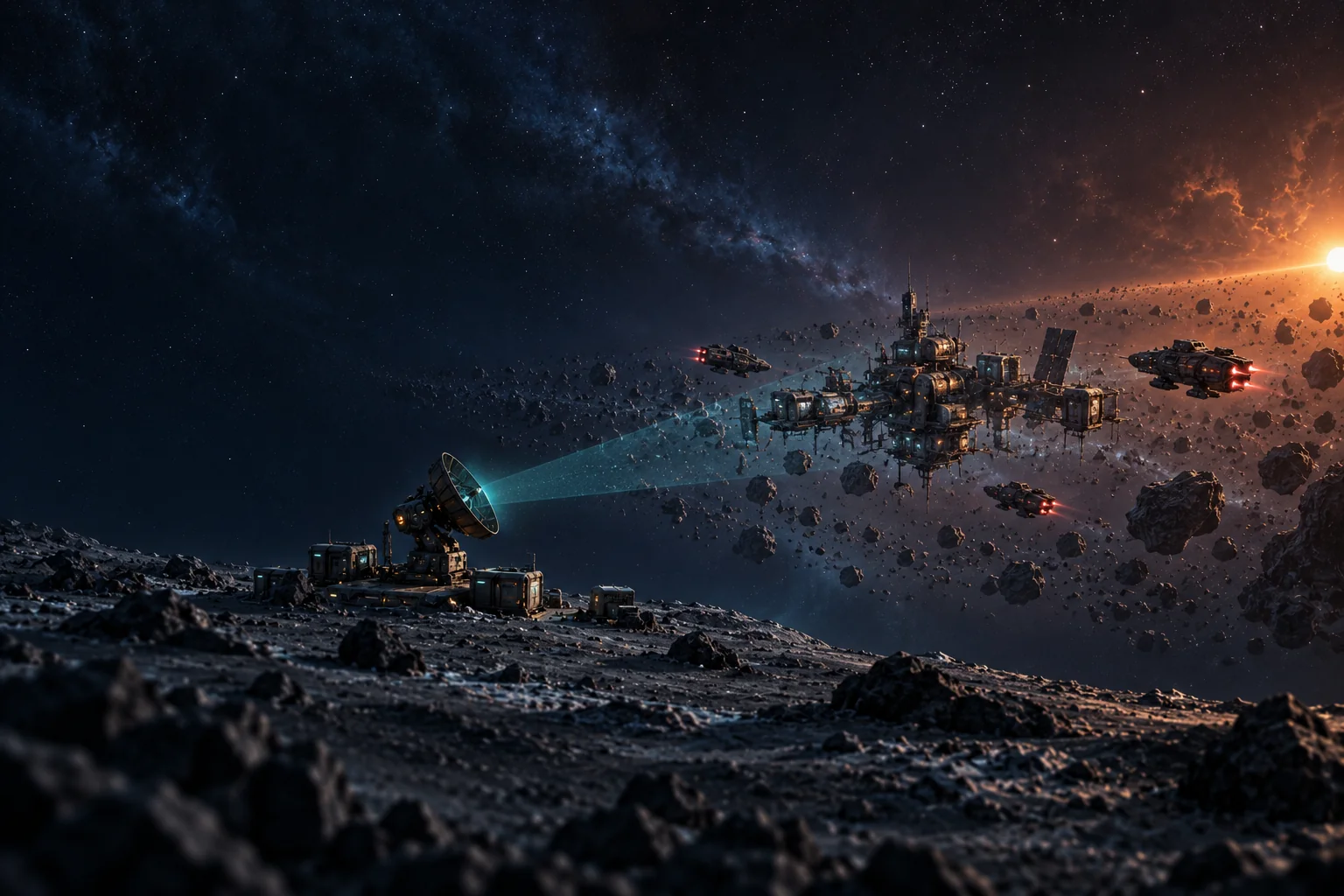
Pirate bases
Where pirate bases appear, how to find them with a phalanx and what a raid pays.

Asteroid mining
Where asteroid fields appear, which fleet can mine them and how much ore a stay brings home.
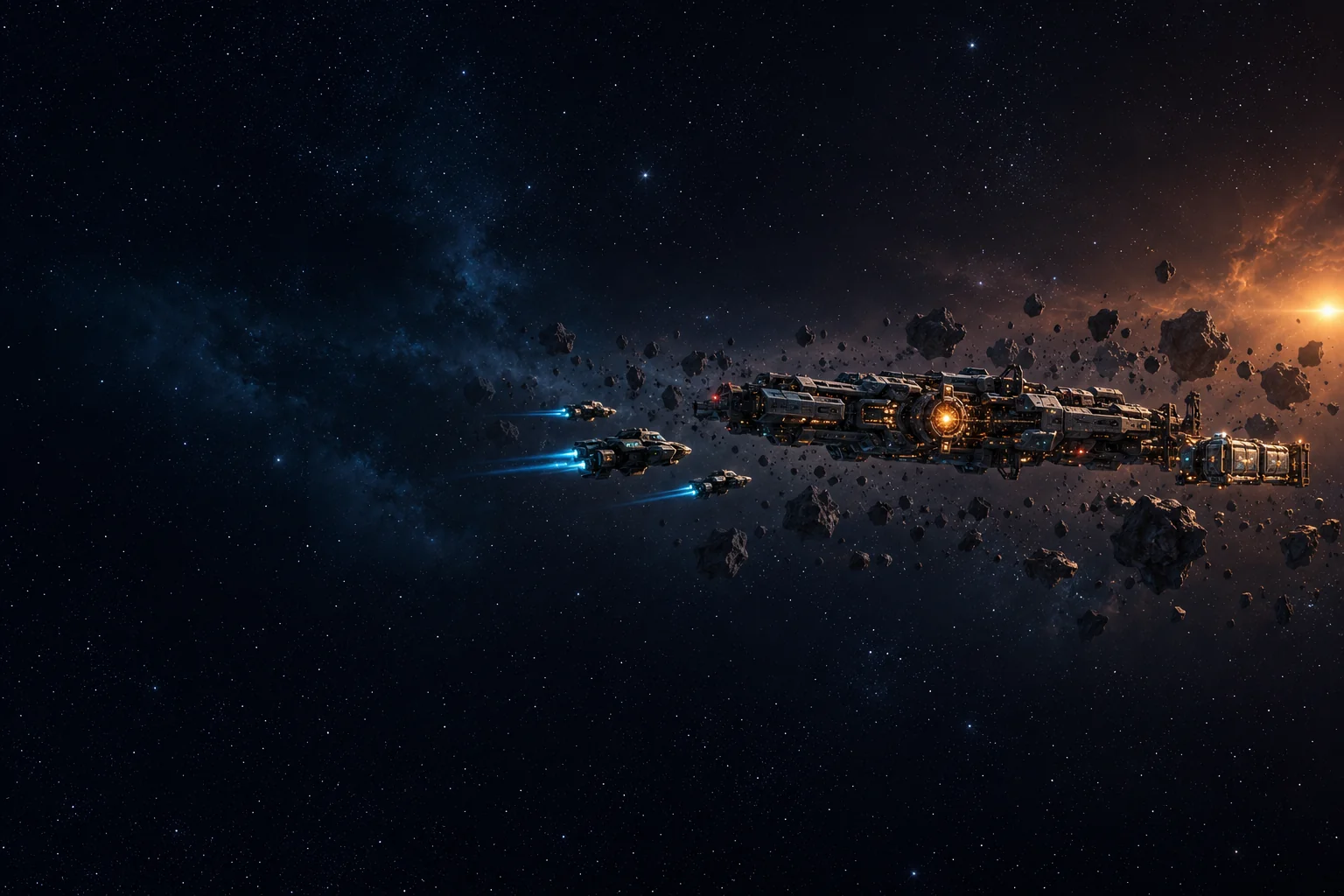
Hunts and bosses
Fight the five hunt sectors level by level for bounties, experience and items, with a boss every few levels.
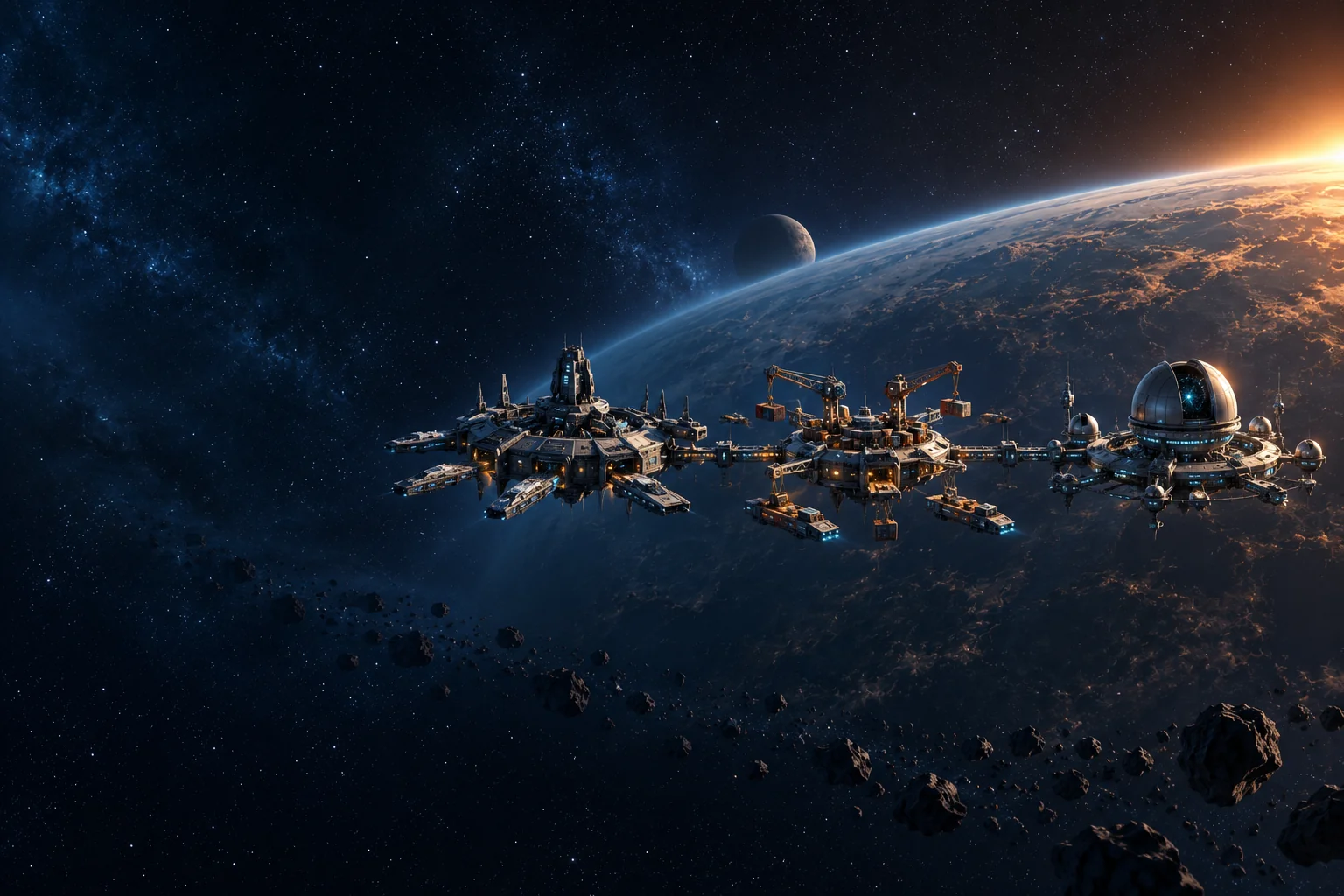
Factions
Vanguard, Syndicate or Archive: how each faction earns reputation, what its perks give and what a switch costs.
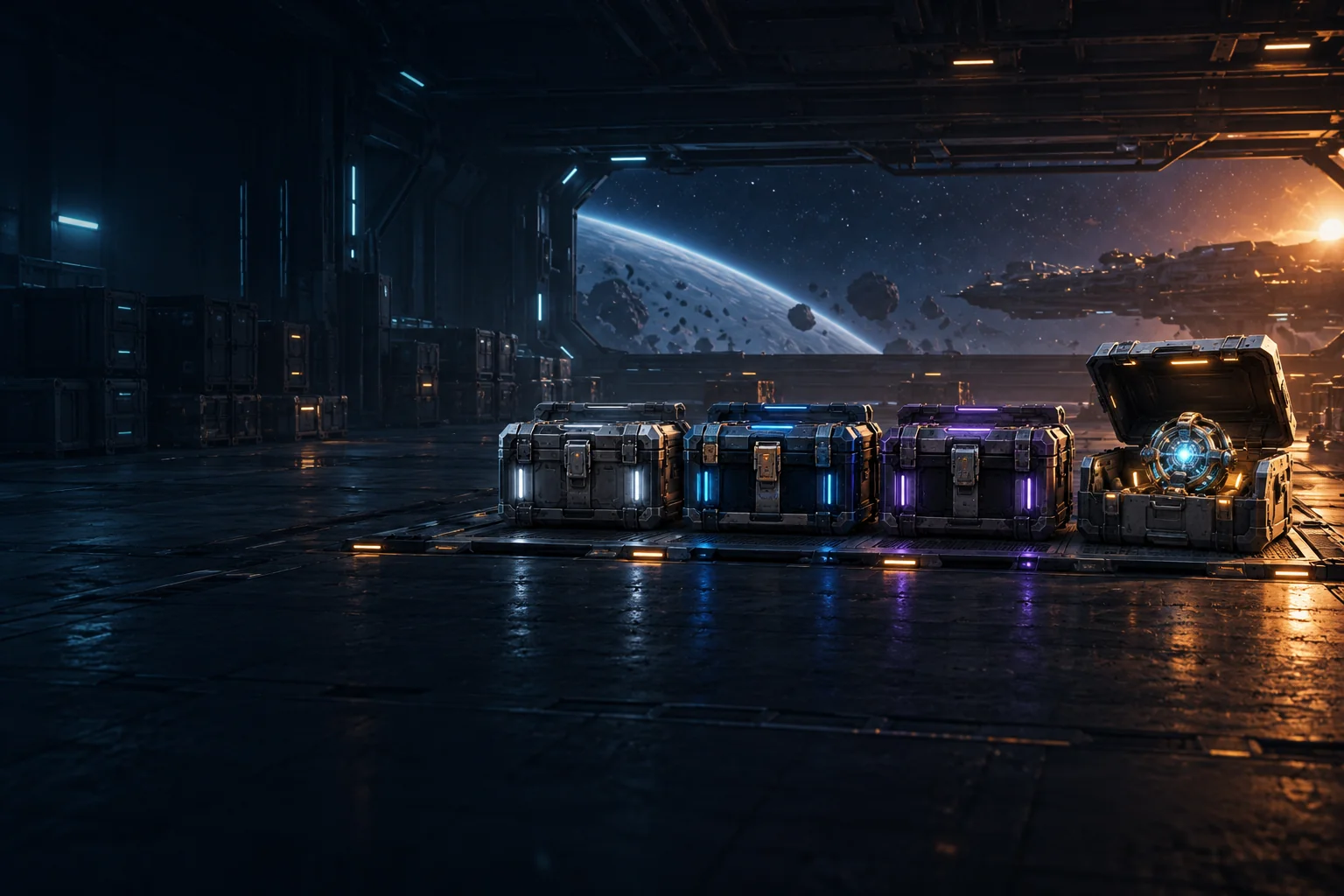
Stash and containers
Artifacts and containers: where they come from, what they do and the chance of every container reward.

Cards and packs
How card packs are earned, how rare each card is and what a completed set adds to your empire.

Alliance base
An alliance's shared base: donations fill its treasury, buildings give every member permanent bonuses, operations and a shop add more.

Commanders and adventures
Your commander levels up, wears equipment, flies with a fleet or guards a world as its warden, and goes on adventures.

Governors
Spend academy points on small permanent upgrades that last the season.
The Arsenal
Six combat modules you level with earned Calibration Data, two equipped at a time, each working in particular rounds or for particular ships.
Collections
Ships
Every ship with its cost, structure, shield, attack, speed, cargo hold and fuel use, read from the universe you pick.

Defences
Every defence and missile with its cost, structure, shield and attack, read from the universe you pick.

Buildings
Every building with the cost of its first level, how fast that cost grows and how high it can go.
Research
Every research with the cost of its first level, how fast that cost grows and how high it can go.